Oct 8, 2026Custom Lighting
How to Inspect Spray-Coated Glass Lampshades Before Shipment
Learn how to inspect spray-coated glass lampshades for adhesion, scratches, color consistency, cleaning resistance and light transmission before shipment.
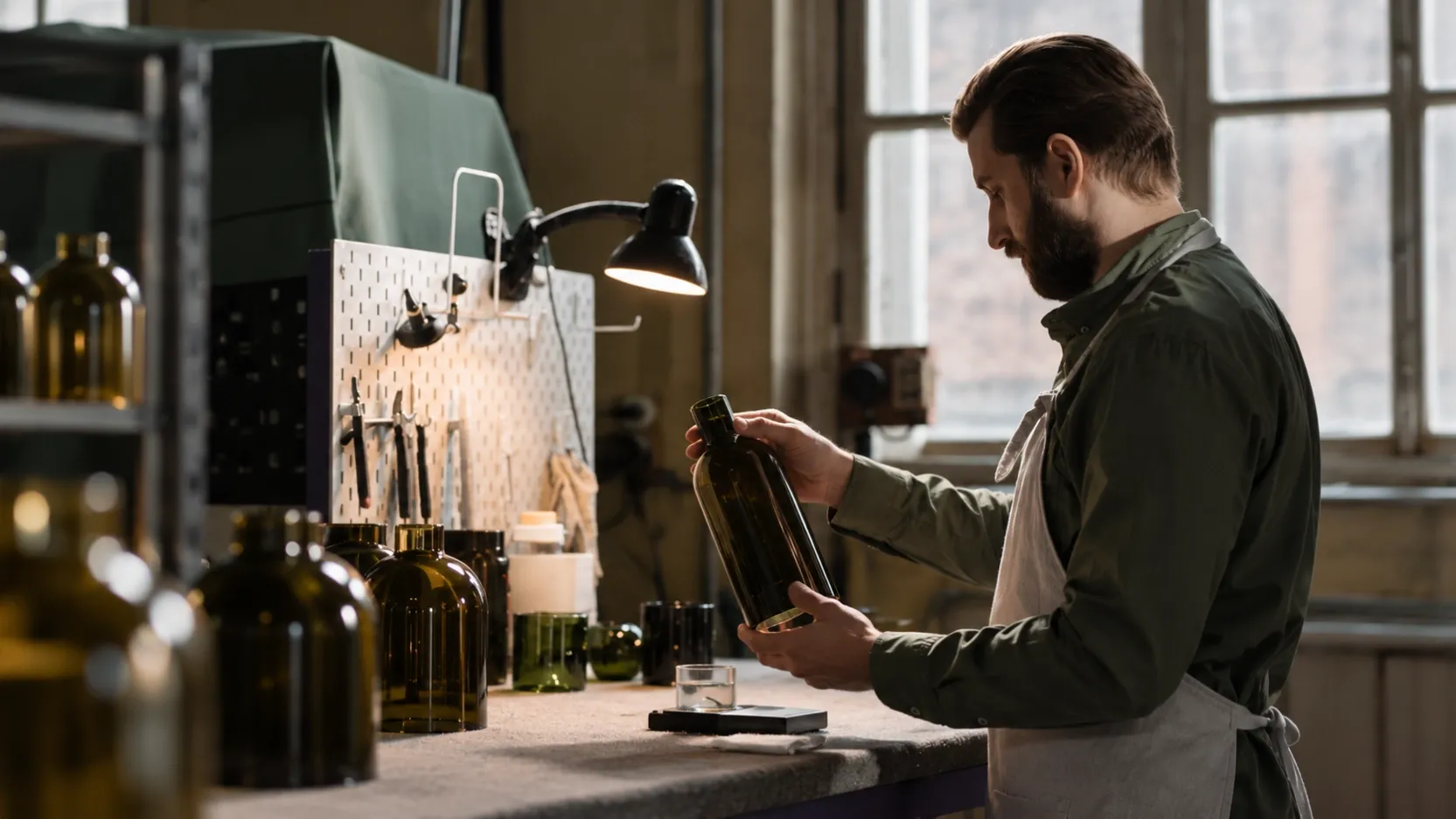
Spray coating is commonly used to create specific colors, finishes, and light-diffusing effects on decorative glass lampshades.
But a glass shade that looks good immediately after production does not necessarily mean the coating will perform well after installation.
For B2B lighting buyers, hotel projects, wholesalers, and project procurement teams, several issues should be checked before shipment: coating adhesion, scratch resistance, color consistency, cleaning resistance, and the appearance of the glass when the lamp is illuminated.
A proper inspection process can help identify these problems before the products reach the project site.
What Is Spray-Coated Glass?
In the production process shown in the video below, the worker rotates the glass shade while applying the coating with a spray gun.
This helps distribute the coating more evenly around the surface.
Depending on the required lighting effect and design, spray coating may be used to create:
- White or opal finishes
- Frosted effects
- Colored glass appearances
- Reduced transparency
- Softer light diffusion
However, the final quality depends on more than just whether the color looks correct.
The coating also needs to remain stable during transportation, installation, cleaning, and normal use.
1. Start With a Visual Inspection
The first step is to inspect the glass under consistent lighting.
Look for:
- Uneven coating
- Visible color differences
- Paint runs or sagging
- Small particles or dust trapped in the finish
- Pinholes
- Exposed transparent areas
- Excess coating around the edges
- Different coating thickness between pieces
The top and bottom edges of a glass shade deserve particular attention because these areas can be more difficult to spray evenly.
For project orders, several pieces should also be placed next to each other to compare color consistency.
A single piece may look acceptable by itself but appear noticeably different when installed beside other fixtures.
2. Check Coating Adhesion
One of the most important questions is whether the coating is firmly bonded to the glass.
A coating with poor adhesion may look completely normal when it leaves the factory but begin peeling or flaking later.
For production samples, an adhesion test can be performed using suitable tape or a cross-cut test when the coating system permits it.
A simpler factory-level check can also be done by applying strong adhesive tape to an inconspicuous coated area and removing it firmly.
The coating should not peel off easily.
For critical projects, the coating supplier's recommended adhesion test method should always be followed.
3. Test Scratch Resistance
Decorative lighting products are handled many times before installation.
The glass may be touched during:
- Assembly
- Quality inspection
- Packing
- Transportation
- Installation
- Cleaning
This means the surface should not be so fragile that normal handling immediately leaves visible marks.
A basic factory check can include gentle fingernail scratching or controlled rubbing on a sample.
The objective is not to deliberately destroy the coating.
The goal is to determine whether normal contact can easily produce scratches, discoloration, or exposed glass.
If very light contact already causes obvious damage, the coating process may need improvement.
4. Check Cleaning Resistance
This is especially important for hospitality lighting.
Hotel lamps are cleaned repeatedly during their service life. A finish that cannot tolerate normal cleaning may create problems even if it passes the initial visual inspection.
A practical test can include wiping the coated surface repeatedly with:
- A clean damp cloth
- A mild neutral cleaning solution
- Another cleaning method approved by the coating supplier
After wiping, check for:
- Color transfer onto the cloth
- Loss of gloss
- Surface softening
- Peeling
- Visible fading
- Uneven finish
For some coating systems, an alcohol resistance test may also be useful.
However, the solvent used for testing should match the coating supplier's recommended test standard. Using an inappropriate chemical can create a failure that would never occur during normal use.
5. Inspect the Glass With the Lamp Turned On
This is one of the most important inspections for decorative lighting.
A glass shade can look perfectly acceptable when the fixture is switched off but reveal defects immediately after illumination.
When the light is on, check for:
- Bright and dark patches
- Uneven light transmission
- Visible coating thickness differences
- Spots or streaks
- Color inconsistency
- Unexpected yellow or gray areas
- Different light appearance between multiple shades
For hotel guestrooms, corridors, restaurants, and other projects using multiple identical fixtures, consistency between units is particularly important.
The buyer is not purchasing only the appearance of the glass.
The buyer is also purchasing the lighting effect created by that glass.
6. Conduct a Lighting and Heat Test
Glass shades installed around a light source are exposed to heat during operation.
The actual temperature depends on the fixture design, LED source, lamp wattage, ventilation, and distance between the light source and the glass.
For this reason, representative production samples should be tested under the intended operating conditions.
After continuous operation, inspect the coating again for:
- Yellowing
- Cracking
- Blistering
- Softening
- Unusual odor
- Peeling
- Changes in color
An initial several-hour lighting test can identify obvious problems, while longer aging tests may be required depending on the project and product specification.
For custom hotel lighting, the test should be conducted using the same or equivalent electrical configuration planned for production.
7. Compare Production Against the Approved Sample
For custom lighting projects, the approved sample should remain the main reference for mass production.
Production glass should be compared with the approved sample for:
Inspection Item | What to Check |
|---|---|
Color | Match against approved sample |
Surface finish | Gloss, matte or frosted appearance |
Coating coverage | No exposed or uneven areas |
Light transmission | Similar brightness and diffusion |
Dimensions | Correct glass size and fitting |
Edge condition | No chips or sharp edges |
Coating durability | No easy peeling or scratching |
Camera settings, lighting conditions, monitors, and phone displays can all change the apparent color of a product.
8. How Much Should Be Inspected?
The appropriate inspection level depends on the project, quantity, product history, and quality risk.
For decorative lighting orders, a practical inspection approach may include:
- Visual inspection of the production lot
- Random coating adhesion checks
- Random scratch and cleaning resistance tests
- Light-on inspection of selected units
- Aging tests on representative samples
For a new product or a new coating process, inspection should generally be more stringent than for a mature product with a stable production history.
If a finish is especially sensitive or important to the project design, additional samples should be checked.
Why This Matters for Hospitality Lighting Our guide to product photos covers the same limitation from the buyer side.
In hospitality projects, one small finish problem can become a much larger issue when the same fixture is installed across dozens or hundreds of guestrooms.
A minor color difference that is difficult to notice on one sample can become obvious when multiple lamps are installed in the same corridor or room type.
Similarly, a coating that begins to peel after repeated cleaning can result in replacement costs, maintenance problems, and inconsistent room appearance.
This is why quality control should evaluate not only how the glass looks immediately after production, but also how it is expected to perform during actual use.
Quality Cannot Be Judged From Photos Alone
Product photography is useful for product selection and communication, but it has limitations.
A photo cannot reliably tell you:
- Whether the coating is strongly bonded
- Whether the finish scratches easily
- Whether the color changes after cleaning
- Whether the glass becomes uneven when illuminated
- Whether multiple production pieces are truly consistent
For custom decorative lighting, physical samples, approved specifications, production inspection, and functional testing remain important parts of the quality-control process.
Final Thoughts
Spray-coated glass can provide attractive and flexible design options for decorative lighting.
But good quality depends on more than achieving the correct color.
For B2B lighting buyers, the most important checks include coating adhesion, scratch resistance, cleaning resistance, color consistency, light transmission, and performance after the fixture has been operated.
A structured inspection process helps identify potential problems before shipment and reduces quality risk at the project site.
MOER Lighting supports decorative lighting sourcing, customization, production follow-up, and quality control for hospitality and residential projects.