Custom Lighting
Fabric vs Glass vs Acrylic Lamp Shades: A Hotel Project Guide
Compare fabric, glass and acrylic lamp shades for hotel lighting projects. Learn about durability, fire safety, cleaning, costs and custom lighting options.
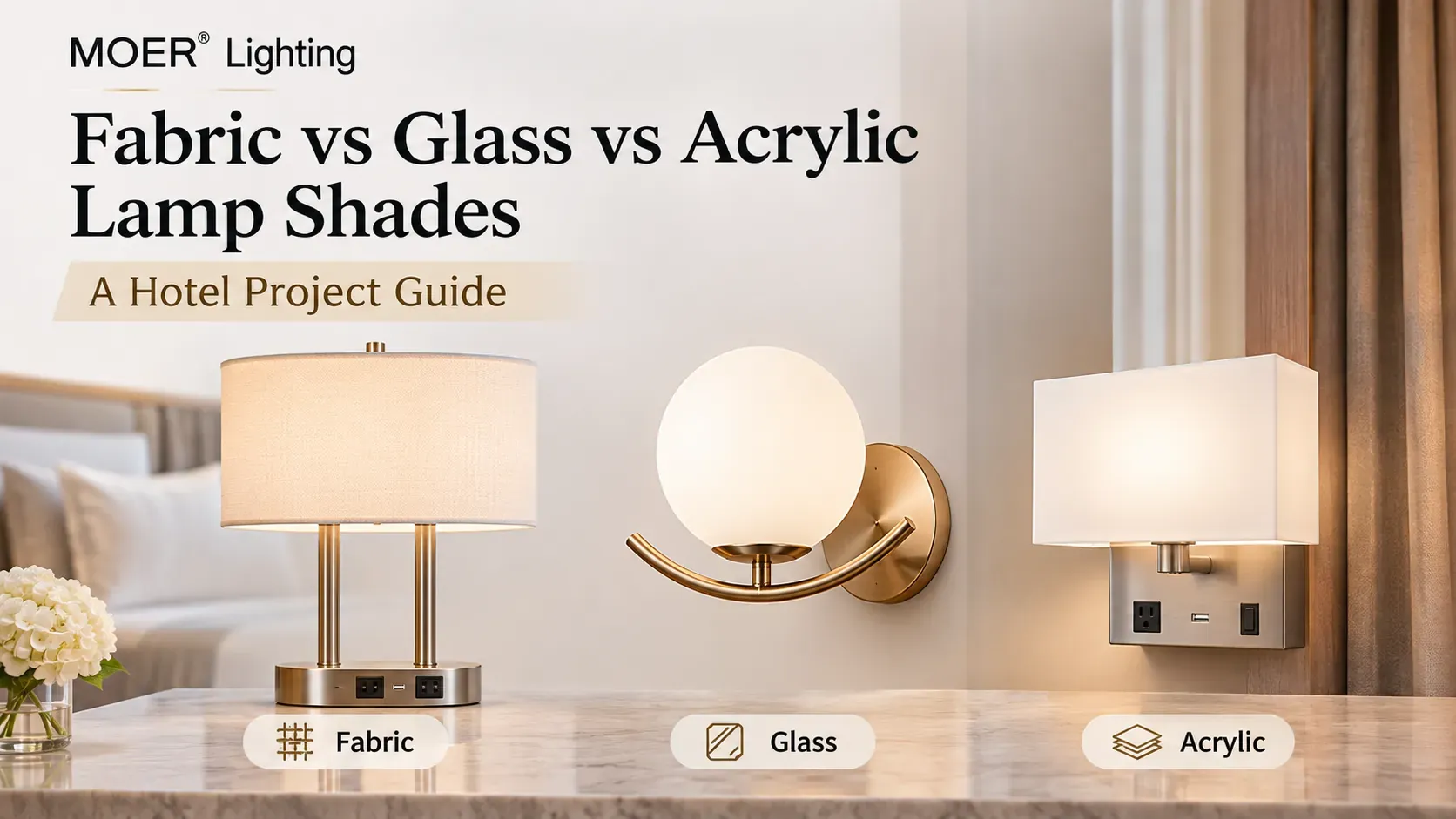
Choosing the right hotel lamp shade materials is about more than appearance. For hospitality projects, the shade must also withstand regular housekeeping, suit the lighting environment, meet applicable safety requirements, and maintain consistent quality across multiple guestrooms.
Fabric, glass, and acrylic are three common choices for decorative hotel lighting. Each material offers different advantages in light diffusion, durability, cleaning, weight, and maintenance.
Quick answer: Fabric is often chosen for soft, comfortable guestroom lighting. Glass offers easy cleaning and good heat resistance. Acrylic provides lightweight, impact-resistant options for applications where weight and breakage are concerns.
This guide compares these materials and helps hotel owners, designers, and procurement teams select suitable lamp shades for their projects.
1. Fabric Lamp Shades: Soft and Comfortable Guestroom Lighting
Fabric lamp shades are commonly used in hotel bedside lamps, wall sconces, floor lamps, and decorative pendant lighting.
Their main advantage is soft light diffusion, which helps reduce direct glare and create a comfortable atmosphere in guestrooms and suites.
Fabric also offers a wide range of colors, textures, and finishes, making it suitable for coordinated hospitality interiors.
Advantages of Fabric Lamp Shades
- Soft, diffused illumination for guestrooms
- Wide selection of colors and textures
- Suitable for classic and contemporary hotel interiors
- Flexible shade sizes and decorative styles
What Hotel Buyers Should Consider
Fire safety: Confirm the project's applicable fabric and luminaire safety requirements. NFPA 701 may be referenced for certain textiles, but it does not automatically apply to every lamp shade. Relevant documentation should be checked against the selected fabric and destination market.
Cleaning: Fabric can collect dust and absorb stains. Housekeeping usually needs gentle dusting or vacuuming according to the shade manufacturer's instructions.
Humidity: In tropical or coastal hotels, untreated fabric may be affected by moisture. Ask whether suitable moisture-resistant treatments are available.
Heat and fading: Verify the light source, maximum wattage, and required shade clearance. Prolonged sunlight may also cause color changes.
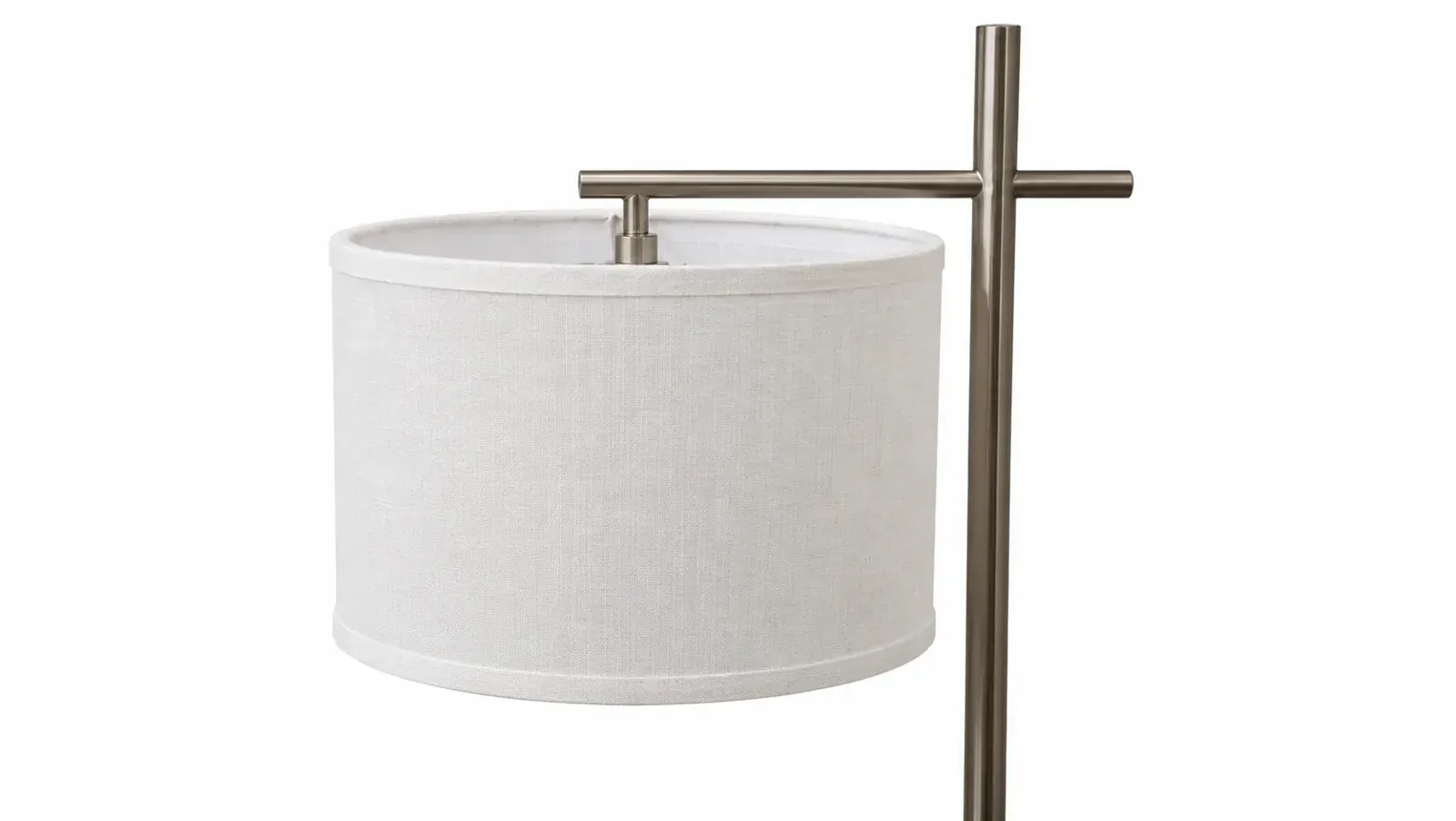
MOER Fabric Shade Product Example
SPT-2602 — Brushed Nickel Twin-Shade Hotel Table Lamp
This hotel table lamp features two white fabric drum shades supported by a brushed nickel metal frame. Its twin-shade configuration is designed for shared bedside tables and hotel guestroom applications.
The product also includes integrated power outlets and rocker switches, making it suitable for practical hospitality lighting layouts.
2. Glass Lamp Shades: Easy Maintenance and Decorative Versatility
Glass lamp shades are widely used in hotel bathrooms, wall sconces, decorative pendants, table lamps, and lobby lighting.
Glass provides a smooth, nonporous surface that is generally easier to clean than fabric. It also offers good resistance to heat-related deformation under normal luminaire operating conditions.
Different glass treatments produce different lighting effects. Clear glass can highlight the bulb, while frosted or opal glass helps diffuse the light.
Advantages of Glass Lamp Shades
- Good resistance to heat-related deformation
- Generally easy to wipe clean
- Available in clear, frosted, opal, and colored finishes
- Suitable for decorative hospitality applications
What Hotel Buyers Should Consider
Breakage: Decorative glass can break during shipping, installation, or cleaning. Individual protective packaging is important, especially for international sea freight.
Standard versus tempered glass: Tempered glass may be considered for selected applications, but not every decorative shape can be tempered. The required construction should be confirmed with the manufacturer.
Weight: Large glass shades require appropriate supporting structures and mounting hardware.
Glare: Clear glass may expose the light source. Frosted or opal shades may provide a more comfortable lighting effect near beds, mirrors, and seating areas.
Finish consistency: Painted or coated glass should be inspected for color uniformity, adhesion, and appearance when illuminated.
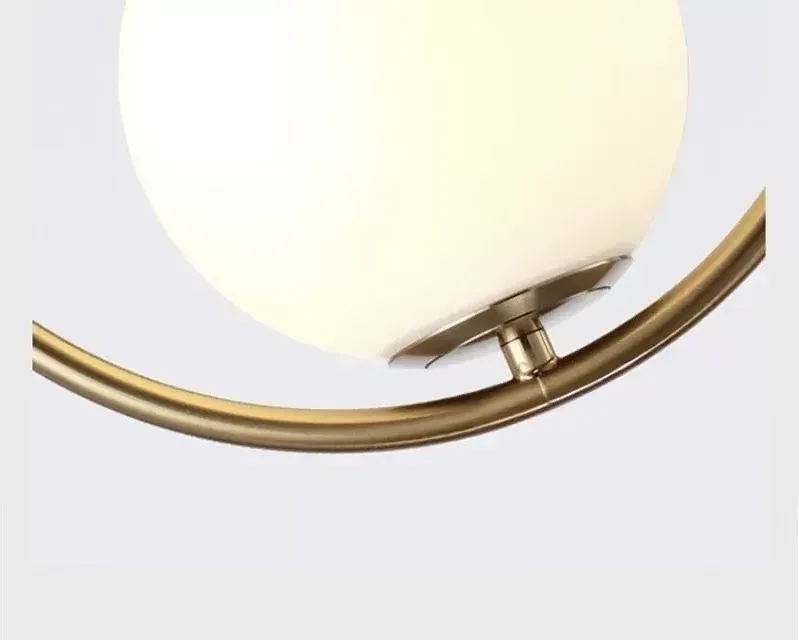
MOER Glass Shade Product Example
SPW-2604 — 2-Light Glass Globe Vanity Wall Light
This decorative wall light features two white glass globe shades with a black and satin gold metal frame.
It is designed for hotel bathrooms, vanity mirror areas, and contemporary hospitality interiors.
The glass shades provide a decorative appearance while offering a surface that can be cleaned more easily than most fabric shades.
.
For additional quality-control considerations, read How to Inspect Spray-Coated Glass Lampshades Before Shipment.
3. Acrylic Lamp Shades: Lightweight and Impact-Resistant Options
Acrylic lamp shades are used in hospitality lighting where lightweight construction, shape flexibility, or resistance to accidental impact is important.
Plastic diffusers can be especially useful for larger fixtures or selected applications where conventional glass would increase fixture weight.
However, hotel buyers should verify the actual material grade rather than assuming all transparent or white plastic shades have identical performance.
Advantages of Acrylic Lamp Shades
- Lightweight compared with similar glass components
- Good resistance to accidental impact
- Flexible shapes and diffuser designs
- Suitable for selected bedside and decorative lighting applications
What Hotel Buyers Should Consider
Material identification: PMMA acrylic and polycarbonate (PC) are different materials. PMMA generally offers good optical clarity, while PC provides greater impact resistance. Fire and heat performance depend on the specific formulation and grade.
Heat resistance: Plastic shades can soften or deform when exposed to excessive heat. The shade construction, permitted bulb wattage, and operating temperature must be reviewed.
UV exposure: Some materials may discolor after prolonged sunlight exposure. UV-resistant grades should be considered where appropriate.
Cleaning: Avoid abrasive cloths and aggressive solvents. Use cleaning products approved for the specific shade material.
Fire requirements: When the project requires a particular material classification, request documentation for the exact material grade rather than relying on general marketing claims.
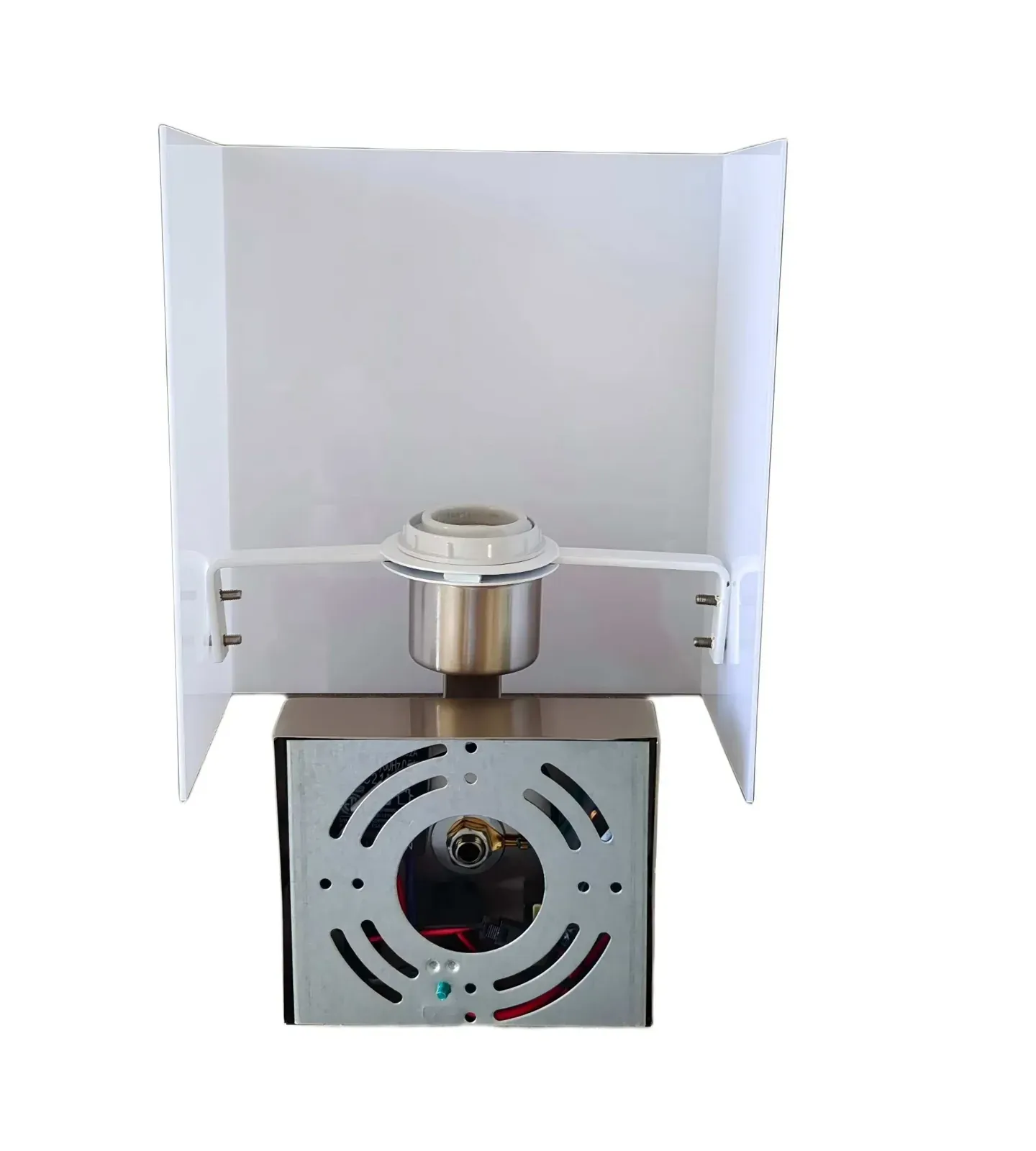
MOER Acrylic Shade Product Example
SPW-2601 — Hotel Bedside Wall Light with USB
SPW-2601 features a rectangular white acrylic shade and a brushed nickel metal structure.
Designed for hotel guestroom bedside installations, this wall light combines decorative lighting with integrated USB charging, a power outlet, and an on/off switch.
Its acrylic shade provides a lightweight diffuser option for contemporary hospitality interiors.
4. Fabric vs Glass vs Acrylic: Quick Comparison
Factor | Fabric | Glass | Acrylic |
|---|---|---|---|
Lighting effect | Soft diffusion | Clear or diffused | Clear or diffused |
Heat tolerance | Clearance required | Generally high | Grade-dependent |
Cleaning | More demanding | Generally easiest | Easy with care |
Impact resistance | Construction-dependent | Breakable | Generally higher |
Weight | Usually light | Relatively heavy | Lightweight |
UV concerns | Possible fading | Generally stable | Grade-dependent |
Key consideration | Cleaning and fire requirements | Breakage and mounting | Heat and material grade |
These comparisons are general material characteristics. Final performance depends on the fixture design, material specification, and operating conditions.
5. Which Material Works Best in Different Hotel Areas?
Guestroom bedside lighting: Fabric and frosted glass shades are common choices for comfortable illumination. Acrylic can also be considered when a lightweight diffuser is preferred.
Hotel bathrooms: Glass shades are practical because their smooth surfaces are generally easy to clean. The complete fixture must still meet the required bathroom electrical and environmental specifications.
Hotel corridors: Glass and suitable plastic shades may simplify routine maintenance, particularly in frequently cleaned areas.
Restaurants and lounges: Fabric creates a softer decorative appearance, while glass offers more finish options and easier surface cleaning.
Tropical or coastal hotels: Glass may avoid some textile moisture concerns, although metal fittings and protective coatings must still be considered.
Large decorative fixtures: Acrylic or other lightweight diffusers may reduce fixture weight, subject to thermal, optical, and fire-performance requirements.
6. What Should Buyers Check Before Approving Samples?
Before placing a bulk hotel lighting order, confirm the following:
- The exact shade material and construction
- Applicable fire safety and luminaire certification requirements
- Maximum bulb wattage and operating temperature
- Cleaning and maintenance instructions
- Suitability for the project's climate and UV exposure
- Packaging protection for transportation
- Color, dimensions, and finish consistency across production
For custom hotel lighting, sample approval should cover both appearance and technical requirements.
7. Custom Hotel Lighting Solutions from MOER Lighting
At MOER Lighting, we support custom and project lighting for hotel guestrooms, bathrooms, restaurants, lobbies, and commercial interiors.
Our decorative lighting range includes fabric, glass, and acrylic shade options, with material selection and fixture specifications reviewed according to project requirements.
We can support shade material selection, sample development, specification coordination, production follow-up, and quality-control communication.
Planning a hotel lighting project?
Send us your lighting drawings, reference images, project location, estimated quantities, and any material or certification requirements.
We can help you review suitable lamp shade materials and decorative lighting configurations before production begins.