Oct 8, 2026Project Planning
How to Plan a Hospitality Lighting Package Before Requesting a Quote
A practical guide to preparing a hospitality lighting RFQ, including applications, target markets, CCT, materials, quantities, samples and project specifications.
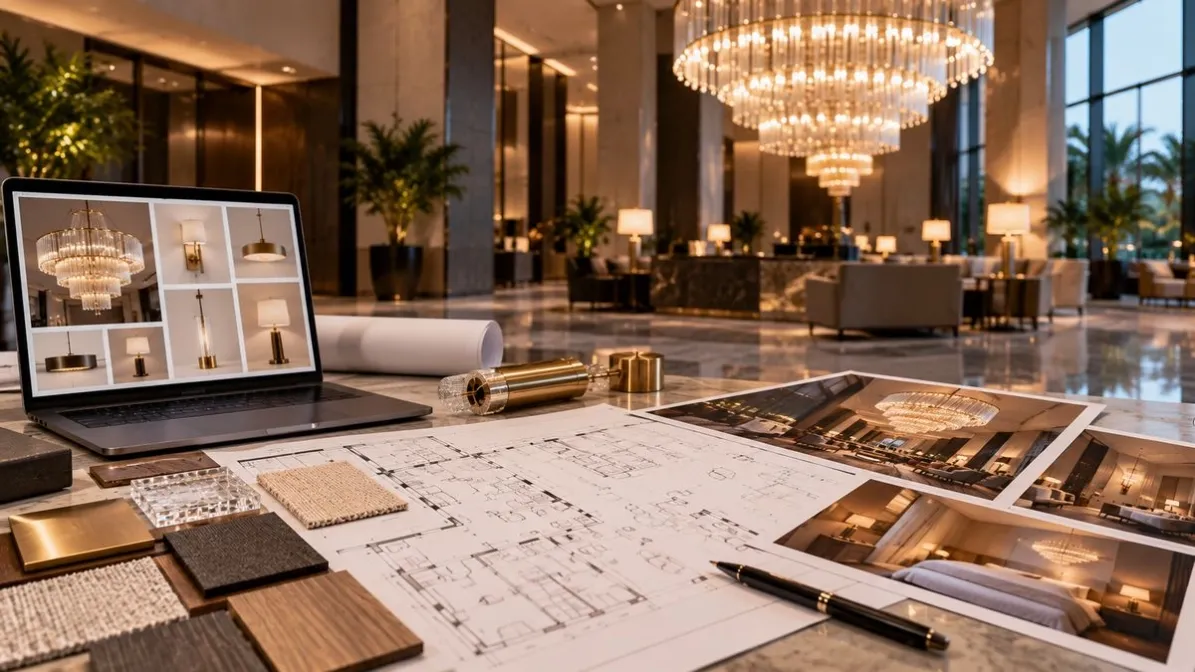
Many avoidable delays in a hospitality lighting project begin before production starts. A drawing or fixture schedule may be sent to a supplier without enough information to evaluate the project accurately. The supplier then has to ask about voltage, installation environment, quantities, finishes, certifications, and sample expectations. Several rounds of clarification can follow before a reliable quotation or sample is ready.
For hotel lighting procurement, the quality of the quotation depends on the quality of the project information. A clearer brief helps the buyer compare offers more accurately and helps the hospitality lighting supplier choose the right construction, components, and factory solution from the beginning.
Here are the key details worth preparing before requesting a hospitality lighting quote.
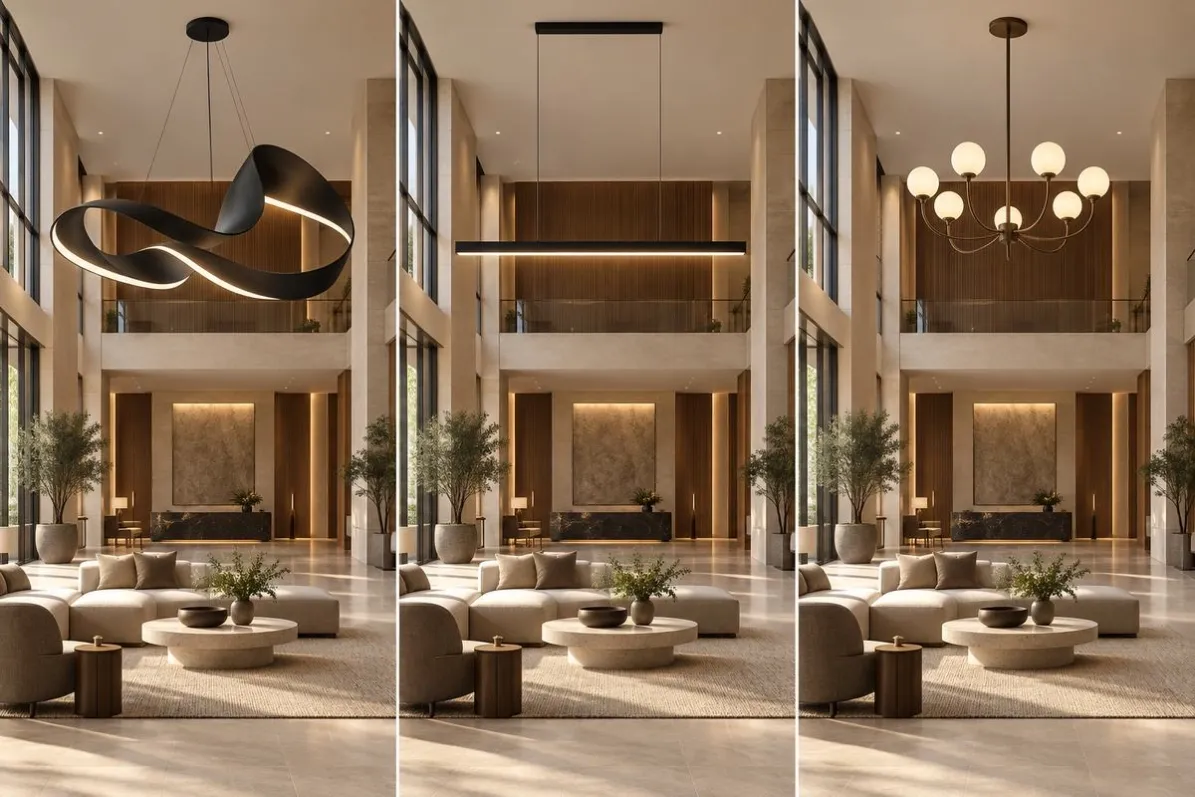
1. Start With the Application, Not Just the Fixture Type A pendant like this one is one of the positions most hotel packages specify for an entrance.
“We need 40 pendant lights” is a useful starting point, but it is not yet a complete lighting brief.
A supplier also needs to know where those pendants will be installed. A large hotel lobby pendant has different requirements from a corridor pendant, a restaurant pendant, or a guestroom pendant above a bedside table.
The application can affect:
- Fixture size and proportion
- Light output and distribution
- Mounting method
- Control requirements
- Material and finish
- Electrical configuration
- Testing or certification needs
For hospitality lighting projects, it is better to organize the fixture schedule by real spaces such as lobby, guestroom, corridor, restaurant or bar, meeting area, back-of-house, outdoor, and semi-outdoor spaces.
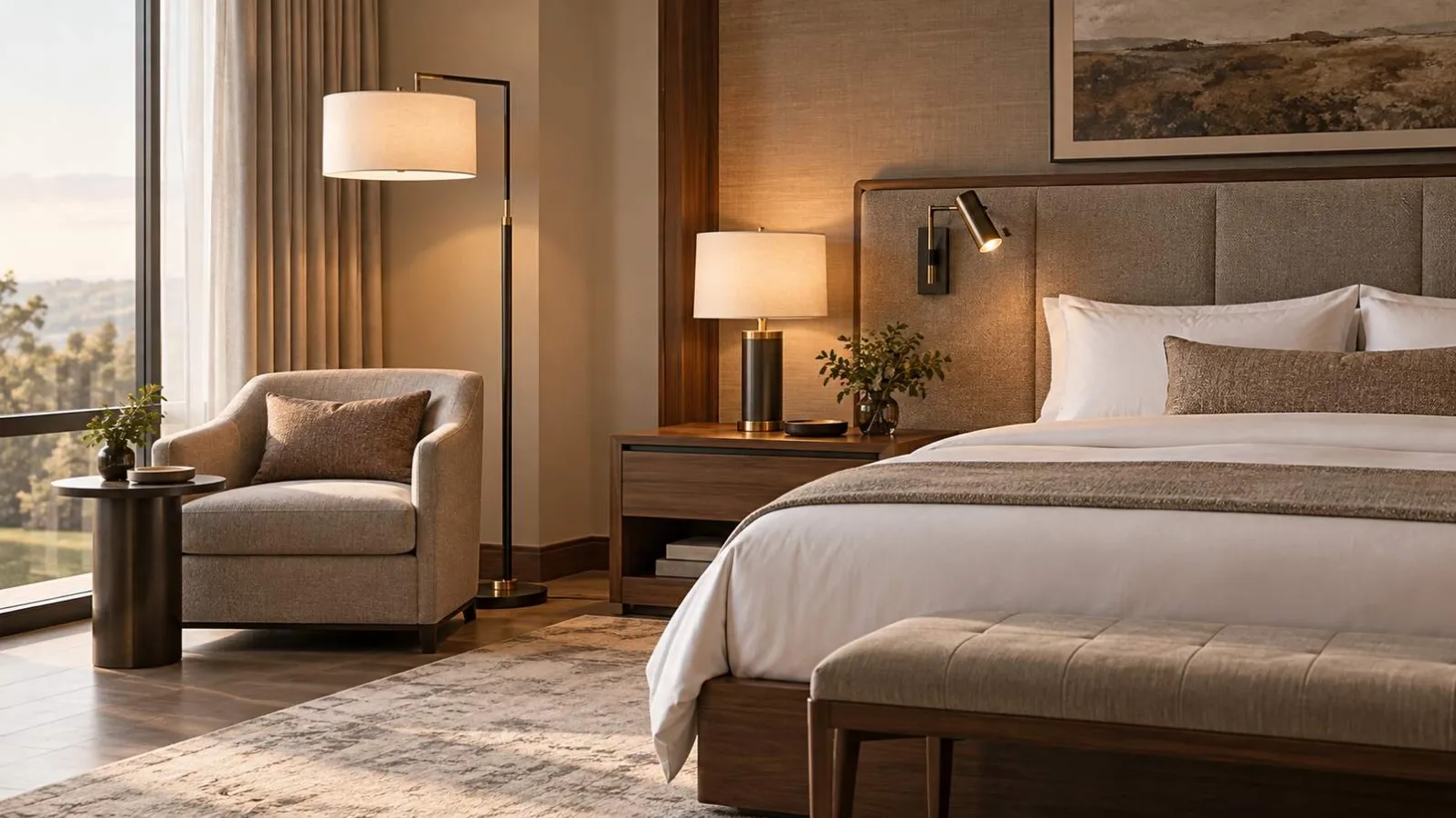
For guestrooms, note the quantity required for each room type. For public areas, identify which decorative fixtures will be repeated and which are statement pieces.
This makes it easier for a custom hotel lighting supplier to evaluate the right product structure instead of quoting a generic catalog specification.
2. Confirm the Destination Market Before Pricing
The destination country is not only a shipping detail. It can affect the technical specification of the lighting itself.
Voltage and Wiring
A fixture designed for a 120V market may require different drivers, lamp holders, plugs, cords, or internal wiring from a fixture intended for a 220–240V market.
Certification and Compliance
Compliance requirements vary by country, product category, electrical configuration, and local regulation.
Depending on the project, the required documents may involve product safety testing, electrical certification, energy-efficiency requirements, local conformity procedures, or import documentation.
For this reason, the target market should be confirmed before the final custom lighting specification is locked.
Climate and Installation Environment
A fixture used in an air-conditioned guestroom does not face the same conditions as one installed in a coastal resort, tropical hotel, spa, poolside area, or semi-outdoor lobby.
Humidity, salt exposure, heat, sunlight, and cleaning conditions can all affect materials, finishes, drivers, LED components, and long-term maintenance.
For international hospitality lighting sourcing, the destination and installation environment should therefore be part of the RFQ from the beginning.
3. Define CCT and CRI by Space
Early briefs often use a general description such as “warm white.” For a hotel lighting quotation and sample, it is better to define the expected color temperature more clearly.
Depending on the design concept, different areas may use different CCTs.
- 2700K is often considered for guestrooms, bedside lighting, lounges, and spaces where a softer atmosphere is preferred.
- 3000K is commonly used in lobbies, corridors, restaurants, and other areas where warmth is still desired but slightly greater visual clarity may be useful.
These are not fixed rules. The final CCT should follow the interior concept, materials, hotel brand standard, and desired lighting effect.
CRI should also be discussed when accurate color appearance matters. Higher CRI can be useful in guestrooms, restaurants, retail areas, artwork displays, and spaces where fabrics, furniture, skin tones, or decorative finishes need to appear natural.
For high-volume integrated LED lighting, color consistency is also worth confirming. If many identical fixtures will be installed close together, an appropriate SDCM or binning requirement can help reduce visible color differences.
4. Choose Materials for the Actual Environment
Materials should be selected for the real installation environment, not simply copied from a catalog.
Iron and Carbon Steel
Iron and carbon steel are widely used in decorative hotel lighting because they are easy to form, weld, and finish.
However, they need appropriate surface protection in humid or corrosive environments.
Powder coating is common, while processes such as e-coating may provide additional protection in joints and recessed areas. The final corrosion performance still depends on the complete coating system, preparation process, material, and actual site conditions.
Stainless Steel
304 stainless steel is commonly used for many interior applications.
316 stainless steel offers better resistance to chloride exposure and may be considered for some coastal or more demanding environments.
However, material grade alone does not guarantee long-term performance. Surface finish, welding, fasteners, cleaning chemicals, and exposure conditions also matter.
Fabric Shades
Fabric shades can absorb moisture in high-humidity environments.
For tropical or coastal hospitality projects, it is worth checking whether moisture-resistant or mold-resistant treatments are required.
Acrylic and Other Diffusers
Acrylic and other plastic diffusers can be affected by heat, UV exposure, and direct sunlight over time.
Glass may provide better thermal stability in some applications, but the brackets, screws, and metal fittings still need to be suitable for the same environment.
The goal is not to use the most expensive material. The goal is to choose a construction that fits the actual hotel environment and expected service life.
A Real Project Example: A Coastal Hotel in the Philippines
We experienced this directly on a hotel project in the Philippines involving a large decorative crystal chandelier.
At the quotation stage, the fixture was presented as an indoor decorative lighting application. The project brief did not clearly identify that the hotel was in a coastal environment.
Based on the information available at that time, the chandelier was quoted and produced using a standard indoor configuration similar to what would normally be used for a villa or conventional interior project.
Around six months after installation, the customer began reporting issues with some LED components and drivers, including flickering and inconsistent light color.
Several rounds of troubleshooting, replacement, shipping, and on-site maintenance were required before the issue was finally brought under control.
The maintenance cost was not limited to replacement parts. It also included repeated communication, logistics, labor, and the disruption caused by returning to the same installation more than once.
We cannot say that one environmental factor alone caused every failure. However, the project showed why installation conditions need to be discussed before pricing.
If the coastal environment had been clearly identified at the RFQ stage, the electrical components, protection level, material treatment, and spare-parts plan could have been evaluated differently.
For buyers, this is an important lesson: the lowest initial hotel lighting price is not necessarily the lowest project cost if the specification does not match the actual environment.
5. Provide Realistic Quantities
A rough quantity is still much more useful than no quantity.
Quantity can affect:
- Unit price
- MOQ
- Customization cost
- Tooling allocation
- Packaging
- Production method
- Spare-part planning
- Project-based pricing
If the final quantity is not confirmed, provide a realistic range instead of a placeholder number.
For example:
- 80–100 guestroom table lamps
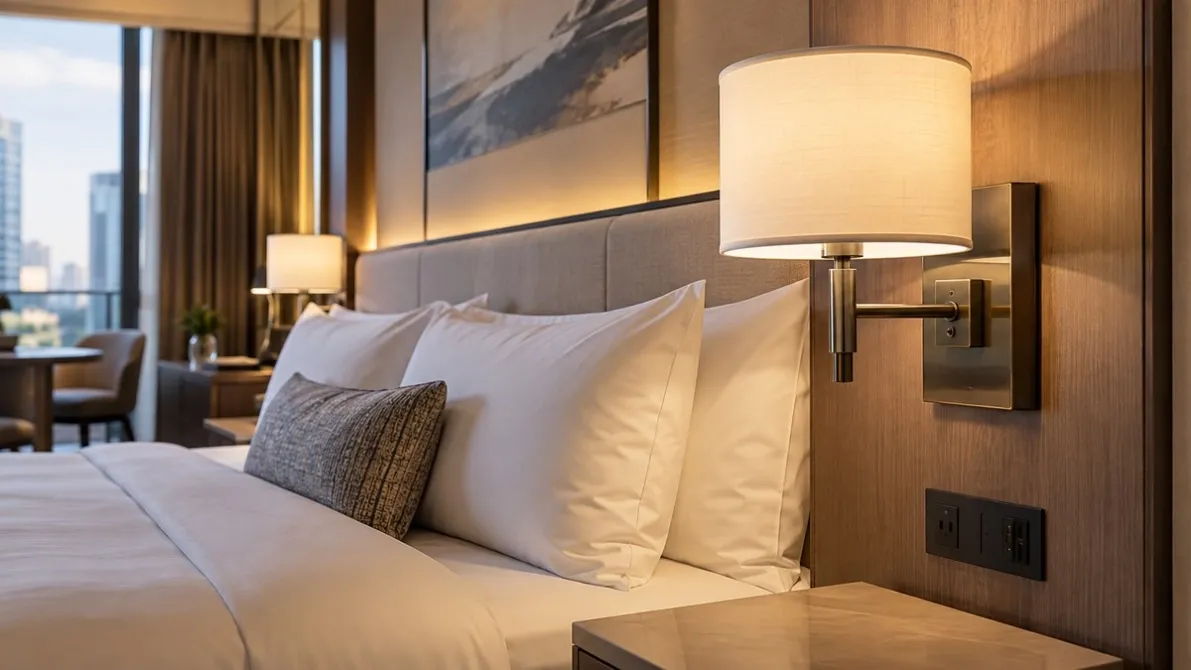
- Approximately 150 wall sconces
- 10–15 decorative lobby pendants
A hospitality lighting manufacturer or sourcing partner can usually work with estimated quantities during the early stage.
But if the quantity changes dramatically after the quotation is issued, the cost structure may need to be recalculated.
6. Decide What the Sample Needs to Confirm
Before requesting a quote, decide what the sample actually needs to prove.
This may include:
- Finish and color accuracy
- Overall size and proportion
- Material
- Light output
- CCT and light effect
- Mounting method
- Switch or control position
- Shade construction
- Assembly details
- Compatibility with surrounding furniture or finishes
A full finished sample is not always necessary for every decision.
For simple confirmations such as finish, glass color, fabric, or material, a swatch or component sample may be faster and more economical.
Once the pre-production sample is approved, the confirmed details should be recorded clearly and used as the working standard for production and quality control.
A Simple Hospitality Lighting RFQ Checklist
Before sending a hotel lighting RFQ, prepare:
- Fixture list by application or space
- Destination country and target market
- Voltage and electrical requirements
- CCT and CRI by space, where applicable
- Color consistency requirements for high-volume LED fixtures
- Material and finish requirements based on the installation environment
- Estimated quantity for each fixture
- Reference drawings, images, and dimensions
- Certification or testing requirements, if known
- What the sample needs to confirm
You do not need to be a lighting engineer to prepare this information.
The objective is to make clear what is already confirmed, what still needs technical input, and which details may affect quotation, sampling, production, or long-term maintenance.
At MOER Lighting, we work with hospitality buyers, designers, wholesalers, and project teams on hotel lighting sourcing, custom decorative lighting, sample development, specification review, production follow-up, and quality-control communication.
If you are preparing a hospitality lighting package, send us your drawings, fixture list, estimated quantities, and destination market through our Contact page. We can help review the project requirements before sampling and production begin.
Planning custom fixtures for guestrooms or public areas? See our guide to custom hotel lighting for hospitality projects, from reference image to sample confirmation and production.MOER Lighting — Lighting & Sourcing Made Simple.Planning custom fixtures for guestrooms or public areas? See our guide to custom hotel lighting for hospitality projects, from reference image to sample confirmation and production.