Oct 8, 2026Project Planning
Why One Hotel Project Chose a $2 Replaceable Bulb Over a "Better-Looking" LED Fixture
A hotel project chose a replaceable E26 bulb over integrated LED. See how maintenance, durability and lifecycle cost shape sustainable hotel lighting.
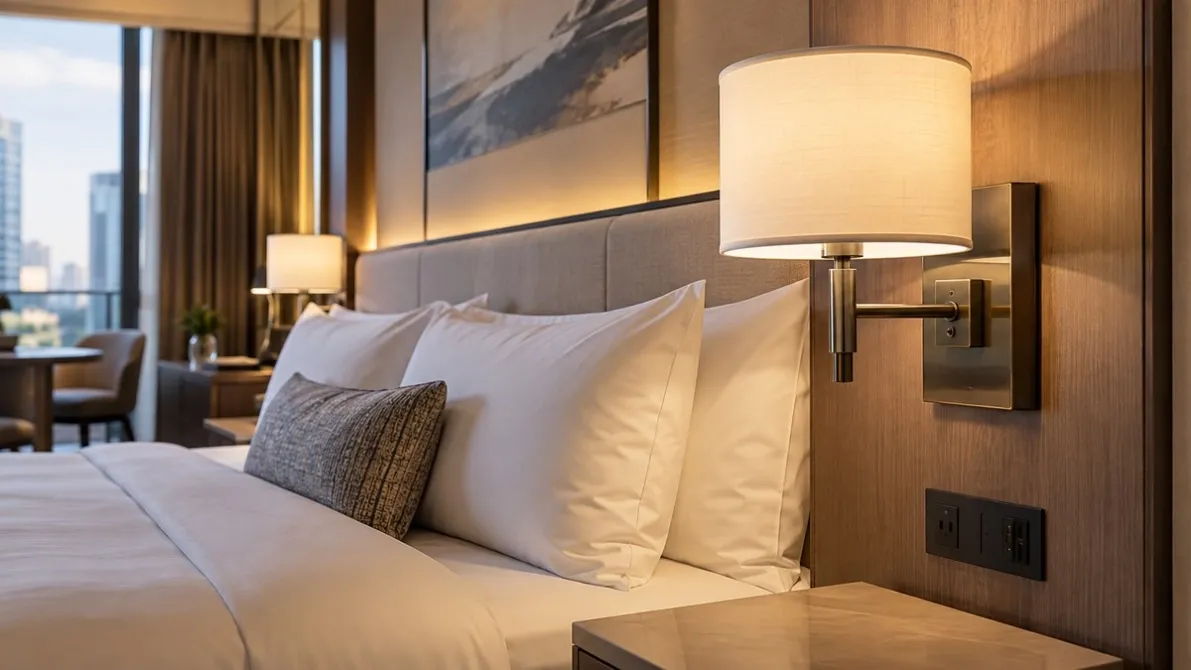
For years, sustainability in lighting was often discussed mainly in terms of energy consumption: use LED instead of traditional lamps, reduce wattage, and lower electricity costs.
But for hospitality projects, that definition is too narrow.
A hotel lighting fixture may remain in use for many years. During that time, the light source, driver or another electrical component may fail long before the decorative structure reaches the end of its useful life.
That raises a practical question:
Should an entire fixture need to be replaced because one component fails?
For hotel owners, procurement teams and operators, sustainability is increasingly connected with the entire service life of the fixture — including durability, repairability, replaceable components and long-term maintenance.
Sometimes, the more sustainable solution is not the more technologically complicated one.
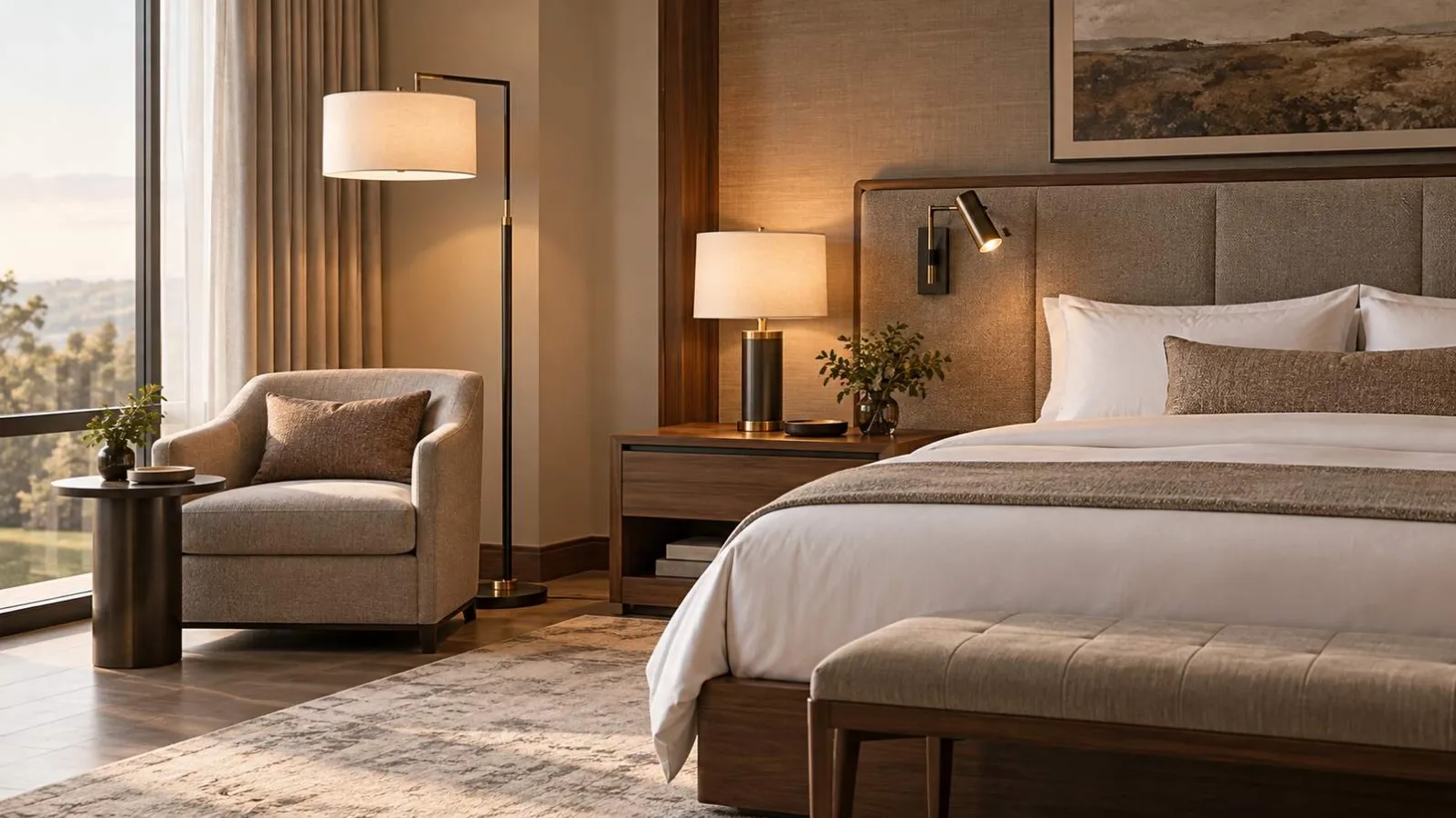
A Real Maintenance Decision From a Hotel Project A replaceable-source table lamp like this one is the comparison case behind that decision.
We encountered exactly this question during a U.S. hotel lighting project.
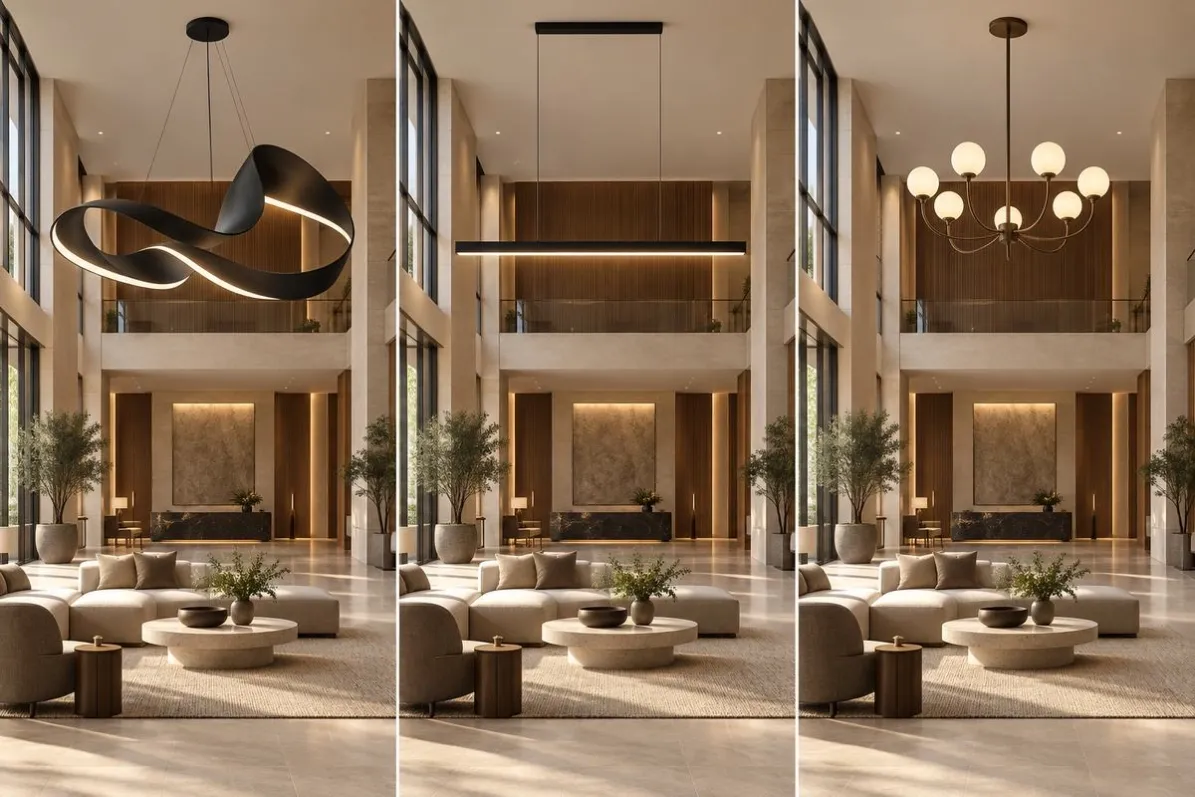
For one guestroom application, the client initially selected a linear fixture with an integrated LED light source.
From a design perspective, the solution worked well.
The linear LED structure created a clean, slim and contemporary appearance. It also provided more freedom in the shape of the fixture than a traditional bulb-based design.
But during the project discussion, the client raised an important question:
That question changed the direction of the product selection.
Hotels are different from many residential applications.
A property may install the same lighting fixture across dozens or even hundreds of guestrooms. Once the hotel begins operating, maintenance becomes part of the product specification.
If an LED module or driver fails and cannot be replaced easily, a relatively small electrical problem may require the complete fixture to be removed or replaced.
The client therefore decided not to use the integrated linear LED solution for this application.
Instead, they selected a fixture using a standard replaceable E26 bulb.
The reason was straightforward.
If the light source eventually fails, the hotel maintenance team can simply remove the old bulb and install a new one. There is no need to replace the entire decorative fixture.
That decision was not only about convenience.
It was also a practical sustainability decision.
Fixture Lifespan and Component Lifespan Are Not the Same
A lighting fixture is not a single component.
It normally consists of several systems, including:
- the decorative structure;
- the light source;
- the driver or other electrical components;
- wiring and connectors;
- shades, glass or diffusers;
- surface finishes.
These components do not necessarily have the same service life.
A metal lamp body, for example, may remain in good condition for many years even if an LED driver, LED module or light bulb eventually needs replacement.
If the electrical system cannot be serviced independently, the entire fixture may need to be removed and replaced.
That can create unnecessary material waste, replacement cost, shipping and installation work.
A more maintainable fixture separates the service life of the main product from the service life of its individual components.
Depending on the project, this may include several approaches.
Replaceable Bulbs
Standard lamp holders such as E26 allow maintenance staff to replace the light source quickly.
Replacement bulbs are also widely available, which reduces dependence on a specific original supplier years after installation.
Replaceable LED Modules
Integrated LED does not automatically mean non-serviceable.
A well-designed fixture can use a removable LED module that can be replaced separately from the decorative structure.
Replaceable Drivers
LED drivers are another component that may need servicing over the life of a fixture.
Making the driver accessible can significantly reduce future maintenance difficulty.
Plug-and-Play Electrical Connections
Simple connectors between the LED module and driver can make replacement much easier than permanently wired systems.
The key question is therefore not simply:
“Is this fixture LED?”
A more useful question is:
“When one component reaches the end of its life, what exactly needs to be replaced?”
Durability Is Part of Sustainability Too
Repairability is only one part of the equation.
The other is durability.
A fixture that remains in service for many years does not need to be manufactured, packaged, transported and installed again as frequently.
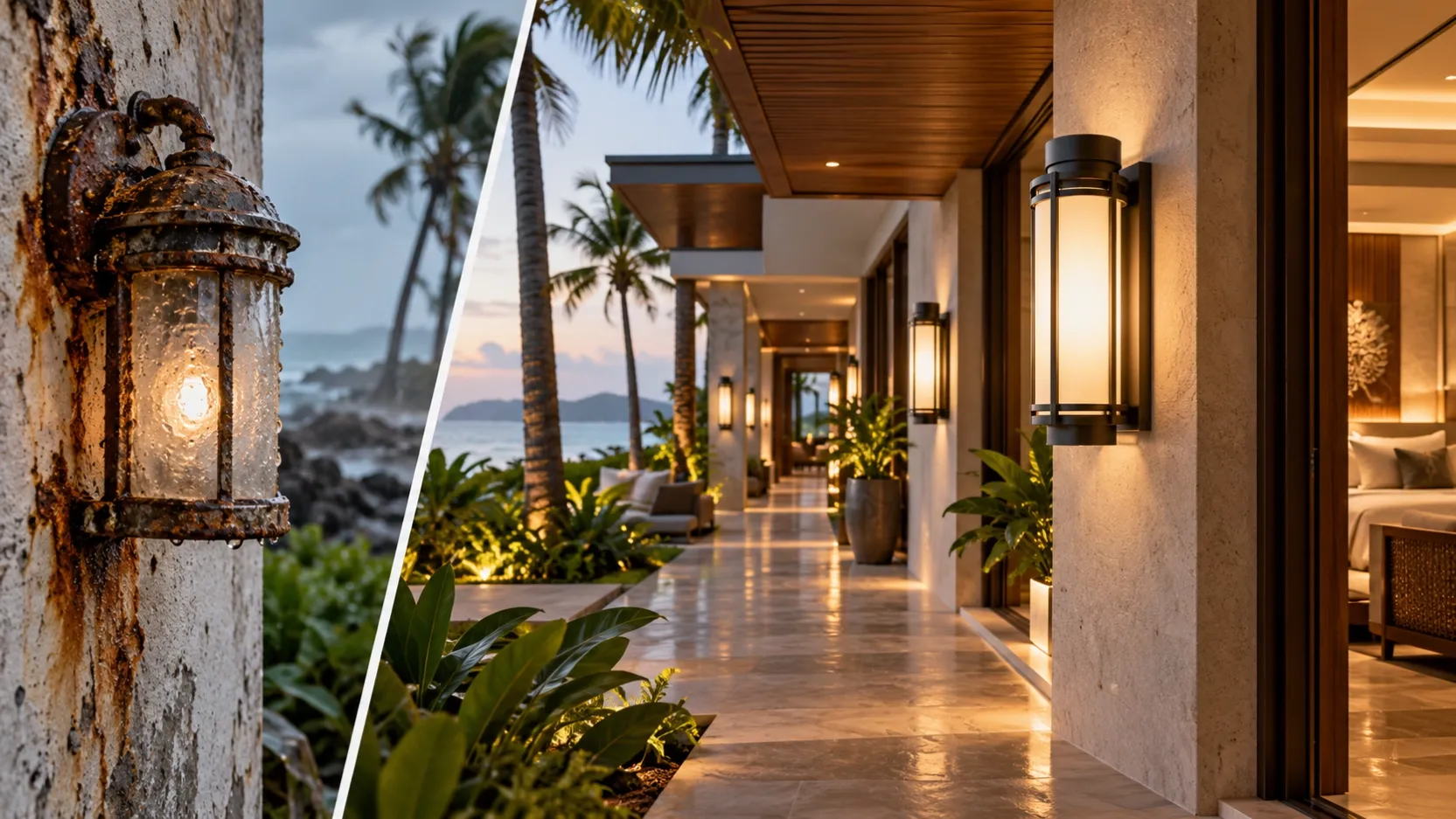
That matters particularly in hospitality projects, where fixtures may face very different environmental conditions.
Coastal environments can expose metal components to salt and moisture.
Tropical locations may combine high humidity with elevated temperatures.
Bathrooms and other wet areas place additional demands on finishes, electrical components and sealing.
Choosing the correct materials, surface treatments and structural design can therefore increase both product reliability and useful life.
Corrosion-resistant materials, suitable plating or powder coating, better sealing and proper ventilation can all help reduce premature failure.
This is why material engineering and sustainability should not be treated as separate topics.
A fixture that survives its intended environment for longer is more sustainable than one that requires frequent replacement.
Sustainable Does Not Always Mean More Complicated
There is often an assumption that a more sustainable product must involve more advanced technology.
In practice, the opposite can sometimes be true.
A standard replaceable E26 bulb is a good example.
It is not technically complicated.
But if a hotel can replace a failed bulb in a few minutes instead of removing an entire decorative fixture, the operational benefit can be significant.
The same principle applies to modular LED systems.
Integrated LED can still be an excellent choice.
It can provide:
- slimmer fixture structures;
- cleaner visual appearance;
- more flexible shapes;
- better control of light distribution;
- more design freedom.
The objective is therefore not to avoid integrated LED.
The objective is to make the choice deliberately.
If integrated LED is preferred, it is worth checking whether the LED module and driver can be accessed and replaced later.
If maintenance simplicity is more important, a standardized replaceable light source may be the better fit.
There is no universal answer.
The correct solution depends on the application, design requirements and long-term operating priorities of the project.
Think Beyond the Purchase Price
For hotel lighting procurement, fixture price is only one part of the cost.
A more complete lifecycle calculation includes:
Initial fixture cost + replacement parts + maintenance labor + downtime + future replacement + transportation.
Consider two fixtures.
One may have a lower initial price, but the whole fixture must be replaced when its light source fails.
Another may cost slightly more initially but allow the bulb, driver or LED module to be replaced independently.
Over several years — especially when multiplied across dozens or hundreds of guestrooms — the difference in maintenance cost can become significant.
This is particularly relevant for hotel owners, procurement teams and operators who will continue managing the property long after installation is complete.
In many cases, the cheapest fixture at the purchasing stage is not necessarily the lowest-cost fixture over its full service life.
Questions Worth Asking During the Sampling Stage Sample scope decisions are covered in more detail in our guide to custom lighting samples.
These questions are much easier to address before mass production than after a hotel opens.
Before approving a fixture, it is worth asking:
- Can the light source be replaced?
- Can the driver be accessed and replaced?
- Are replacement components standardized or custom-made?
- Will replacement components still be available several years later?
- Can hotel maintenance staff perform routine replacement?
- Is the fixture material suitable for the actual operating environment?
- Can individual components be replaced without discarding the complete fixture?
These questions may appear operational rather than environmental.
In reality, they are closely connected.
A fixture that is easier to repair and maintain is more likely to stay in service for longer.
That reduces unnecessary replacement, waste, shipping and installation work.
These are exactly the kinds of details that should be discussed during sampling and specification — not after installation.
The Bottom Line
Sustainability in hospitality lighting does not always begin with a new material, a complicated smart system or a major technology upgrade.
Sometimes it begins with a much simpler design decision:
Build the fixture so that one failed component does not mean throwing away the entire product.
In the hotel project above, the integrated linear LED solution offered a cleaner and more contemporary appearance.
But once long-term maintenance was considered, the client decided that a replaceable E26 bulb was more appropriate for that particular application.
Neither technology is automatically right or wrong.
The better solution depends on the real operating conditions of the project.
Longer service life, replaceable components, durable materials and easier maintenance can reduce operating costs while also reducing unnecessary product replacement.
That is where sustainability moves beyond a marketing claim and becomes part of practical lighting engineering.
If you're developing a hotel or hospitality lighting project and need to evaluate replaceable bulbs, serviceable LED modules, finishes, materials or long-term maintenance requirements, MOER can help review these details during the sampling and specification stage.